The Sony Walkman was a portable cassette player introduced in 1979 that fundamentally changed how people listened to music. The original blue-and-silver TPS-L2 paired compact cassette playback with lightweight stereo headphones, allowing listeners to carry their own music practically anywhere. The idea initially faced skepticism because the device could not record, but it became an enormous international success and helped establish personal portable audio as an entire consumer-electronics category. Sony produced hundreds of Walkman models over the following three decades, selling more than 200 million cassette-based units before the classic cassette line reached the end of its commercial life in 2010. The Walkman name survived on later CD, MiniDisc and digital players, but the cassette Walkman remains the product that made personal music truly portable.
The Story
History of Sony Cassette Walkman
Before the Walkman, listening to your own music generally meant being somewhere your music player was.
At home, there were stereo systems and record players.
In cars, there were radios and tape decks.
Portable radios existed, of course, but they played whatever a radio station happened to be broadcasting.
Sony changed the relationship between music and location.
The idea that eventually became the Walkman emerged inside Sony during the late 1970s.
Sony co-founder Masaru Ibuka frequently traveled internationally and wanted a convenient way to listen to stereo music during long flights.
A Sony Pressman portable cassette recorder was modified for stereo playback.
The result was interesting enough that Sony chairman and co-founder Akio Morita saw something larger in it.
Young people loved music.
Why should listening to their own music stop when they left home?
The concept seems obvious now.
It was not obvious then.
Sony proposed selling a portable cassette machine that could play tapes but could not record them.
This caused concern inside the company.
Portable cassette machines were commonly recorders. Removing the recording function seemed like removing one of the primary reasons to own one.
There was another strange element.
The device didn't even have a conventional speaker.
You were expected to wear headphones.
Sony was therefore proposing a cassette recorder that couldn't record and a portable music player that couldn't play music aloud.
Some people inside and outside Sony thought this was an excellent way to manufacture something nobody needed.
Akio Morita disagreed.
Development moved extraordinarily quickly.
In February 1979, Morita told a group of Sony employees that he wanted the product ready before summer vacation. Engineers adapted proven components from the Pressman rather than developing an entirely new mechanism.
At the same time, another Sony team had developed remarkably lightweight headphones.
Conventional headphones could weigh hundreds of grams. Sony's new MDR-3-series headphones weighed less than 50 grams.
Pairing them with the portable cassette player completed the idea.
Music you could actually carry.
Sony named the machine the Walkman.
Even that caused concern.
"Walkman" was invented English, and some executives questioned whether the name made sense internationally.
They had a point.
It does sound slightly like something invented during an English lesson that had gone off course.
Sony nevertheless launched the TPS-L2 Walkman in Japan on July 1, 1979.
The price was 33,000 yen.
The original machine was visually distinctive, with a blue-and-silver metal body, large mechanical controls, and two headphone jacks.
There was even a bright orange "Hot Line" button that lowered the music and activated a microphone so two listeners could talk without removing their headphones.
Sony expected young people to share the experience.
Future generations would solve this problem by simply ignoring each other.
The launch itself was unusual.
Sony invited journalists to an announcement, put them on a bus, handed them Walkmans, and took them to Tokyo's Yoyogi Park.
There, reporters listened through headphones while Sony employees and students demonstrated the new concept by walking, skating, and exercising while listening to music.
The press response was underwhelming.
Most newspapers barely covered it.
Sales during the first month were also disappointing.
Sony had manufactured an initial batch of 30,000 units.
Only about 3,000 sold by the end of July.
For a brief moment, everyone who said the idea was ridiculous appeared to have been correct.
Then people figured it out.
Sony employees aggressively demonstrated Walkmans in public, letting potential customers experience the device rather than trying to explain why anyone needed one.
Once people put on the headphones, the appeal became much easier to understand.
Sales accelerated.
Within months, demand overwhelmed supply.
The product became a sensation in Japan.
International expansion followed.
Sony's overseas divisions initially disliked the Walkman name enough that the company experimented with alternatives.
In the United States, it was marketed as the Soundabout.
In Britain, the Stowaway.
In Australia, the Freestyle.
This created the slightly absurd situation in which Sony had invented a globally appealing product and then given it several different names.
Consumers eventually solved the problem for them.
The Japanese name was already spreading internationally, and travelers visiting Japan were buying Walkmans and bringing them home.
Sony standardized the Walkman name worldwide.
By 1986, "Walkman" had become sufficiently embedded in everyday language to appear in the Oxford English Dictionary.
Sony had not merely created a successful product.
It had created a word.
The 1980s became the Walkman's defining decade.
Sony released a constant stream of new models.
They became smaller.
Lighter.
Thinner.
More efficient.
Some included radios.
Some offered auto-reverse.
Some were designed for sports.
Some emphasized premium sound.
Some became fashion accessories almost as much as electronics.
The WM-2, introduced in 1981, refined the original concept into a smaller and cleaner package and became one of the most successful models.
Then came increasingly ambitious exercises in miniaturization.
The WM-20, released in 1983, was approximately the size of a cassette case when not in use. The body expanded slightly so a tape could fit inside.
At this point Sony was essentially designing cassette players smaller than the object they were required to contain.
Physics was becoming an inconvenience.
The Walkman also changed the cassette itself.
Making a mixtape had existed before portable cassette players, but the Walkman gave mixtapes a particularly intimate purpose.
A tape could become a personal soundtrack.
You could make one for yourself.
You could make one for someone else.
You could carefully choose the songs, arrange the order, write the titles on the little card, decorate the case, and then discover that the final song didn't quite fit on Side B.
There was no software update for this.
You either rearranged the tape or accepted your failure.
The Walkman also changed public space.
People began walking through cities wearing headphones.
They listened on trains.
They listened while jogging.
They listened while studying.
They listened while traveling.
For the first time on a massive scale, people could create a private audio environment while physically occupying a public one.
Today this is so normal that seeing someone walking around without headphones can seem unusual.
In 1979, the opposite was true.
The Walkman made personal audio ordinary.
Competitors quickly entered the market.
Portable cassette players appeared from Panasonic, Aiwa, Toshiba and numerous other manufacturers.
"Walkman" became so closely associated with the category that people often used the word casually for portable cassette players regardless of who manufactured them.
Sony continued evolving the brand as music formats changed.
In 1984, Sony introduced the D-50 portable compact-disc player. It was initially associated with the Discman name, while later portable CD products were folded into the Walkman family.
In 1992 came the MiniDisc Walkman.
In 1999, Sony introduced flash-memory Walkman products.
The brand survived each technological transition.
The cassette version, however, was slowly becoming a product from another age.
Compact discs had already displaced cassettes for many listeners during the 1990s.
Then MP3 files eliminated the need to carry physical albums at all.
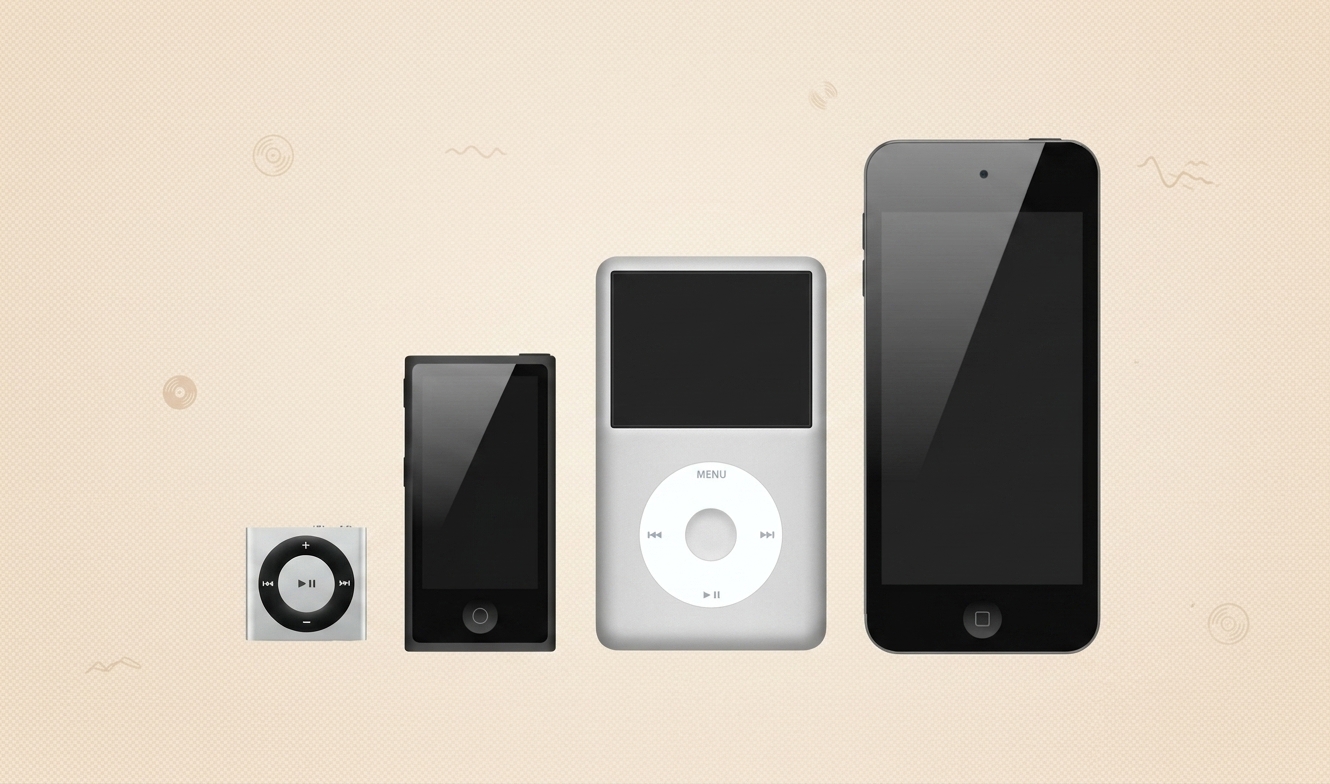
And in 2001, Apple introduced the iPod.
A cassette Walkman could carry one album.
Maybe two, if you were feeling adventurous and had a 120-minute tape.
An iPod could carry thousands of songs.
It did not need rewinding.
It did not gradually begin playing Whitney Houston at an incorrect speed because its AA batteries were dying.
It did not occasionally eat the music.
The technological argument was becoming difficult to win.
Sony continued selling cassette Walkmans anyway.
Demand survived among people with existing tape collections and customers who preferred inexpensive, straightforward players.
By the end, the cassette Walkman had become less a symbol of the future than a remarkably persistent survivor from it.
In 2010, Sony ended Japanese production and sales of its cassette Walkman line as demand dwindled in the digital-music era. Some Sony-branded cassette models continued to be produced outside Japan for remaining export markets for a period afterward.
More than three decades after the TPS-L2 arrived, the classic cassette Walkman era had effectively ended.
The Walkman brand did not.
Sony continues using it for digital audio products.
That distinction is appropriate.
The cassette disappeared.
The idea behind the Walkman never did.
What Happened?
Why was Sony Cassette Walkman discontinued?
The cassette Walkman was discontinued because the technology around it had been replaced.
This was not a product failure.
Quite the opposite.
Sony had sold hundreds of millions of cassette Walkman players, and the device had helped create the entire market for personal portable music.
The problem was the cassette.
By the 1990s, compact discs had become the dominant prerecorded music format in many markets.
Portable CD players offered digital audio, instant track selection, and freedom from rewinding.
Sony participated enthusiastically in that transition with its own Discman and later CD Walkman products.
MiniDisc provided another alternative, particularly in Japan.
Then digital audio changed the equation much more dramatically.
MP3 players could store music without any removable physical media.
Memory capacity increased.
Storage prices fell.
Computers became central to music collections.
Apple's iPod, introduced in 2001, made carrying large digital music libraries particularly appealing to mainstream consumers.
Later smartphones absorbed portable music playback almost completely.
Against those devices, the cassette Walkman had obvious limitations.
A cassette held a relatively small amount of music.
Finding a particular song could require fast-forwarding and guessing.
Tapes wore out.
They could stretch.
They could snap.
They could become tangled inside the mechanism.
Portable players contained numerous moving parts.
And batteries eventually slowed down enough to make your favorite singer sound as though they had suddenly become extremely tired.
None of this had prevented the Walkman from becoming revolutionary in 1979.
By 2010, consumers had alternatives that eliminated nearly every one of those problems.
Demand inevitably declined.
Sony stopped producing cassette Walkmans for the Japanese market in 2010, with the final Japanese shipment having gone to retailers earlier that year. Reports at the time noted that Sony-branded cassette Walkmans would continue for a period in some overseas markets through outside manufacturing.
The discontinuation therefore reflected ordinary technological succession rather than a dramatic corporate mistake.
The Walkman had done its job.
In fact, it had done its job almost too well.
Sony taught the world that music should follow you everywhere.
Once consumers accepted that idea, they naturally preferred devices capable of bringing considerably more music with them.
Afterward
What happened afterward?
The cassette Walkman disappeared.
Portable personal music did not.
That is probably the best measure of the Walkman's importance.
Many discontinued products leave behind memories.
The Walkman left behind behavior.
Put headphones on.
Choose your music.
Leave the house.
That sequence is completely ordinary today.
It was not ordinary before the Walkman.
Sony transformed listening from something closely tied to a room, stereo system, automobile, or radio station into something attached to an individual.
Your surroundings no longer determined your soundtrack.
You did.
The effect went far beyond consumer electronics.
The Walkman influenced fashion.
Advertising.
Fitness.
Commuting.
Travel.
Music consumption.
Urban life.
Even social behavior.
Headphones became a visible signal that someone could occupy a public space while remaining inside a private auditory world.
Later products improved virtually every technical aspect of the experience.
Portable CD players offered digital sound.
MiniDisc added recordability and track access.
MP3 players eliminated physical media.
The iPod combined large storage capacity with an exceptionally polished interface.
Smartphones eventually absorbed music playback into a device people were already carrying.
Streaming services then removed the need to own or store much of the music locally.
But the fundamental proposition remained remarkably similar to the one Sony had introduced in 1979:
Your music.
Wherever you are.
The Walkman's commercial impact was enormous.
By 1999, Sony reported cumulative shipments of 186 million cassette Walkmans, 46 million CD Walkmans and 4.6 million MiniDisc Walkmans.
The numbers continued growing.
Sony later reported that more than 400 million Walkman products across its various formats had been sold during the first forty years of the brand.
The name itself became extraordinary.
Sony originally worried that "Walkman" sounded like bad English.
It eventually became English.
The Oxford English Dictionary included the term in 1986.
That is an unusually complete victory for a product name people initially wanted to replace.
The original TPS-L2 also became one of the most recognizable pieces of consumer electronics ever produced.
Its blue-and-silver body now represents the beginning of the portable-audio era.
Surviving examples became collectors' items.
Later appearances in popular culture introduced the original design to generations born long after cassette Walkmans had disappeared from stores.
Cassette culture itself eventually experienced a smaller revival.
Independent musicians released albums on tape.
Collectors sought vintage players.
Mixtapes became nostalgic artifacts.
Old Walkman models that had once been tossed into drawers became desirable again.
Part of that nostalgia comes from the physical experience.
Using a cassette required participation.
You chose a tape.
Opened the case.
Inserted it.
Closed the door.
Pressed a mechanical button.
Flipped the cassette when Side A ended.
If you wanted a particular song, you developed an approximate understanding of how long to hold fast-forward.
There was no recommendation algorithm.
The Walkman did not know what you might enjoy next.
It barely knew where track four was.
And yet that limitation created a different relationship with albums.
People often listened in sequence because skipping songs required actual effort.
Mixtapes required planning because the available recording time was finite.
Music collections occupied physical space.
The technology imposed restrictions that modern digital audio has almost entirely eliminated.
Nobody should pretend all of those restrictions were wonderful.
A cassette unraveling itself inside a Walkman was not a meaningful artisanal listening experience.
It was annoying.
The pencil existed for a reason.
But nostalgia rarely preserves inconvenience accurately.
What survives is the memory of carrying a favorite album somewhere for the first time.
Walking down a street with headphones on.
Making a tape for somebody.
Opening a new cassette.
Pressing Play.
And realizing that the music didn't have to stay home anymore.
That is why the cassette Walkman belongs among the most important discontinued consumer products ever made.
It wasn't merely a smaller stereo.
It changed where music was allowed to exist.
Today, billions of people walk around with headphones connected to devices containing or accessing virtually every song they could want.
The technology is almost unrecognizable compared with a TPS-L2.
The behavior would look extremely familiar.
The Walkman eventually became obsolete.
Its idea did not.